
Milk Thistle Supplements: Benefits, Uses and Interactions
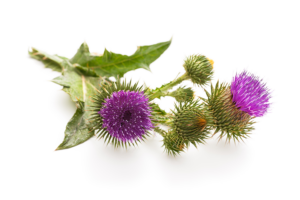
Milk thistle is one of the best-known herbal supplements for liver health. Its distinctive purple flowers and white-veined leaves have made the plant recognizable for centuries, but most people today know milk thistle because of supplements marketed for liver support and the body’s natural detoxification processes.
The active compounds found in milk thistle are collectively known as silymarin. Silymarin has antioxidant properties and has been widely studied for its possible effects on liver cells. However, while milk thistle has a long history of traditional use, research in people has not established it as a treatment for liver disease.
This guide explains milk thistle benefits, uses, silymarin, side effects, interactions, and who should use milk thistle supplements cautiously.
What Is Milk Thistle?
Milk thistle, botanically known as Silybum marianum, is a flowering plant in the same botanical family as ragweed, daisies, chrysanthemums and sunflowers. It is native to parts of Europe and the Mediterranean region but now grows in many areas around the world.
The plant gets its unusual name from the white markings on its leaves, which traditionally were described as looking like drops of milk.
Milk thistle has been used as an herb for centuries, particularly in traditional preparations associated with the liver and digestive system. Modern milk thistle supplements typically use extracts made from the plant’s seeds.
What Is Silymarin?
Silymarin is the main group of plant compounds extracted from milk thistle seeds. Rather than being one individual substance, silymarin is a mixture of naturally occurring compounds known as flavonolignans. One of its major components is called silybin, sometimes spelled silibinin.
This distinction can make supplement labels confusing. Some bottles say “milk thistle,” while others emphasize “silymarin” or list a percentage of silymarin.
In simple terms:
- Milk thistle is the plant.
- Milk thistle extract is a concentrated preparation made from the plant, usually the seeds.
- Silymarin is the group of compounds in milk thistle extract that has received most of the scientific attention.
Because extracts can vary considerably, it is useful to look at both the amount of milk thistle extract and the amount or percentage of silymarin listed on a supplement label.
Milk Thistle Benefits
Milk thistle is most commonly associated with liver support, although researchers have also investigated its antioxidant properties and possible effects on blood sugar.
1. Liver Health Support
The liver performs hundreds of important functions. It processes nutrients, helps regulate metabolism, produces bile, breaks down many medications and assists in removing substances the body does not need.
Milk thistle has traditionally been used to support liver health, which is why it is frequently included in modern liver-support formulas.
Laboratory research suggests that compounds in silymarin have antioxidant and other biological activity that may help explain the herb’s traditional reputation. Human research, however, has been mixed.
Clinical trials have examined milk thistle or silymarin in people with conditions such as fatty liver disease, alcohol-related liver disease and viral hepatitis. Results have not been consistent enough to establish milk thistle as a treatment for these conditions.
For that reason, milk thistle should be considered a dietary supplement for general wellness or liver support rather than a replacement for medical treatment for liver disease.
2. Antioxidant Support
Silymarin has antioxidant activity. Antioxidants help cells deal with oxidative stress caused by unstable molecules known as free radicals.
This antioxidant activity is one reason milk thistle appears in supplements marketed for liver health and general wellness.
3. Possible Blood Sugar Support
Milk thistle has also been studied for its possible influence on blood sugar. Some studies involving people with type 2 diabetes have suggested that milk thistle extracts may improve certain measures of blood sugar control.
The evidence is not strong enough to use milk thistle as a replacement for diabetes treatment, but this possible effect is important for another reason: people taking medications that lower blood sugar should use milk thistle cautiously.
Combining multiple substances that affect glucose could potentially cause blood sugar to fall lower than intended.
Does Milk Thistle Detox the Liver?
This is one of the most common questions about milk thistle. Milk thistle does not literally “detox” the liver in the way the term is often used in advertising. Your liver is already one of the body’s primary detoxification organs. It continuously processes substances in the blood and helps the body eliminate waste products.
Milk thistle is commonly marketed as a liver detox supplement because of its traditional use and the biological activity of silymarin. It may be more accurate to think of milk thistle as a supplement used to support normal liver function rather than something that cleans accumulated toxins out of the liver.
If liver tests are abnormal or liver disease is suspected, please consult your doctor.
Common Forms of Milk Thistle Supplements
Milk thistle is available in several forms, and the amount of silymarin can vary considerably from one product to another.
Milk Thistle Capsules and Tablets
Capsules and tablets are among the most common forms. Some contain powdered milk thistle seed, while others contain concentrated extracts.
Standardized Milk Thistle Extract
Some supplements are standardized to provide a particular percentage or amount of silymarin. Standardization can make it easier to compare products, although it does not by itself guarantee that one product is better than another.
Combination Liver Support Formulas
Milk thistle is frequently combined with other nutrients or herbs in formulas designed for liver support. Irwin Naturals Milk Thistle Liver Detox, for example, is formulated around milk thistle and liver-support ingredients. Another option is NOW Foods Liver Refresh, which combines milk thistle extract with N-acetyl cysteine (NAC), methionine, and several herbs.
Milk Thistle Interactions: What Should Not Be Taken With Milk Thistle?
Milk thistle appears to have a relatively low potential for serious drug interactions, but that does not mean interactions are impossible. Anyone taking prescription medication should tell their doctor or pharmacist about herbal supplements they use.
Diabetes and Blood Sugar Medications
Because some research suggests milk thistle may lower blood sugar, people taking insulin or medications for diabetes should use caution. Blood glucose may need closer monitoring when beginning or stopping a supplement that could affect blood sugar.
Medications Processed by the Liver
Silymarin has demonstrated effects on certain liver enzymes and transport systems in laboratory research. Available evidence suggests clinically significant interactions are uncommon, but caution is still reasonable with medications that have a narrow therapeutic range or depend heavily on liver metabolism. A pharmacist can check a specific medication against milk thistle if you are unsure.
Blood Thinners
There have been concerns about possible interactions between milk thistle and some medications that affect blood clotting, including warfarin. If you take a prescription blood thinner, antiplatelet medication or another medication where small changes in drug levels could be important, ask your healthcare provider before taking concentrated milk thistle supplements.
Milk Thistle Side Effects
Milk thistle is generally well tolerated when taken orally, but side effects can occur.
The most commonly reported side effects involve the digestive system and may include:
- Gas
- Bloating
- Nausea
- Upset stomach
- Diarrhea
Allergic reactions are also possible.
Milk Thistle and Ragweed Allergies
This is an especially important precaution that can easily be overlooked.
Milk thistle belongs to the Asteraceae plant family. People who are allergic to plants in this family may be more likely to experience an allergic reaction to milk thistle.
This botanical family includes:
- Ragweed
- Chrysanthemums
- Marigolds
- Daisies
- Sunflowers
If you have significant plant or pollen allergies, particularly a known allergy to plants in the Asteraceae family, talk with a healthcare professional before trying milk thistle.
Who Should Avoid Milk Thistle?
Milk thistle may not be appropriate for everyone. Talk with a healthcare provider before taking milk thistle if you:
- Take prescription medications, particularly diabetes medicines, blood thinners or medications with a narrow therapeutic range.
- Have diabetes or frequently experience low blood sugar.
- Have a known allergy to ragweed or related plants.
- Are pregnant or breastfeeding, because there is not enough reliable information about safety during pregnancy or breastfeeding.
- Have diagnosed liver disease or abnormal liver tests that have not been medically evaluated.
- Are preparing for surgery or another medical procedure.
A supplement marketed for liver support should never be used to delay medical care for symptoms of liver disease.
How to Choose a Milk Thistle Supplement
Milk thistle products can differ substantially, so compare labels rather than assuming every milk thistle supplement is equivalent.
Look for:
- The amount of milk thistle extract per serving.
- The amount or percentage of silymarin, when provided.
- A clearly labeled serving size.
- A complete list of other active ingredients.
- Warnings and allergen information.
- A reputable manufacturer with clear supplement labeling.
This is particularly important because research has found considerable variation in the composition and quality of some commercially available milk thistle supplements.
Milk Thistle Frequently Asked Questions
Is milk thistle good for the liver?
Milk thistle has a long history of traditional use for liver support, and silymarin has antioxidant activity. However, clinical research has not conclusively shown that milk thistle treats liver diseases. It is better viewed as a liver-support supplement rather than a treatment for liver disease.
Is silymarin the same as milk thistle?
Not exactly. Milk thistle is the plant, while silymarin is a group of compounds extracted primarily from milk thistle seeds. Many concentrated milk thistle supplements are standardized according to their silymarin content.
Does milk thistle detox your liver?
Your liver naturally carries out detoxification processes every day. Milk thistle is commonly marketed for liver detox and liver support, but there is no good evidence that it physically “cleans toxins” from the liver. Its compounds are instead studied for antioxidant and other biological effects.
Can you take milk thistle every day?
Milk thistle is commonly sold as a daily dietary supplement and appears to be well tolerated by many adults. Whether daily use is appropriate depends on the product, your health conditions and any medications you take. Follow the product directions and check with a healthcare professional if you take medication or have a medical condition.
What medications should not be taken with milk thistle?
There is no single universal list of medications that cannot be combined with milk thistle. However, people taking diabetes medications, blood thinners such as warfarin, or medications with a narrow therapeutic range should discuss milk thistle with a doctor or pharmacist before using it.
Does milk thistle have side effects?
Milk thistle is generally well tolerated, but some people experience digestive symptoms such as gas, bloating, nausea or diarrhea. Allergic reactions may occur, particularly in people sensitive to ragweed or related plants.
How long does milk thistle take to work?
There is no established amount of time in which milk thistle should produce a noticeable effect. Many people taking it for general liver support may not feel any obvious change at all. Milk thistle should not be judged as a treatment for liver disease based on whether someone feels different after taking it.
The Bottom Line
Milk thistle has been used for centuries and remains one of the most popular herbal supplements associated with liver health. Most modern research focuses on silymarin, a group of compounds extracted from milk thistle seeds that has demonstrated antioxidant and other biological activity.
Milk thistle appears to be well tolerated by most adults, but the evidence supporting its use as a treatment for liver disease is still inconclusive. It may be useful as part of a general wellness or liver-support routine, but it should not replace medical evaluation or treatment.
When choosing a supplement, compare the amount of milk thistle extract and silymarin, pay attention to additional ingredients, and check for potential medication interactions.
Shop milk thistle and liver-support supplements at Discount Remedies:
This article is for informational purposes only and is not intended to diagnose, treat, cure or prevent any disease. Dietary supplements may interact with medications or may not be appropriate for everyone. Talk with your healthcare provider or pharmacist if you have a medical condition, take prescription medication, are pregnant or breastfeeding, or have questions about whether a supplement is appropriate for you.
Sources
National Center for Complementary and Integrative Health (NCCIH), “Milk Thistle: Usefulness and Safety.” National Institutes of Health.
National Library of Medicine, LiverTox: “Milk Thistle.” National Center for Biotechnology Information.
Use Coupon Code: FREE
*Sorry, coupons can't be combined.